Wednesday, September 30, 2015

Success in the Pizzeria Business Requires a Clearly Defined Identity

When you look at the man wearing an apron covered in flour and marinara sauce as he stands behind the pizza counter to take your order, you probably don’t envision that same man taking frequent vacations to Italy or spending his weekends sailing up and down the coast. That’s understandable, but the truth is that there is a lot of money to be made in the pizzeria industry. With relatively low overhead and startup costs that are far from prohibitive, opening a pizzeria in the right location is an opportunity worth considering.

Even if you do not have any previous experience working in a pizzeria, learning the ropes is not terribly difficult. With the right teacher, you can learn how to make dough, toss pizzas and cook them to perfection in a single day. Of course, there are certain subtleties that take more time to learn, but spending a month in a working pizzeria is really all that is necessary to gain an accurate understanding of the basics. It is, however, incredibly important to deeply consider the pizzeria’s identity before entering the industry, as a clearly defined identity is absolutely critical to the success or failure of the pizzeria.

According to Hugo Sebastian Hirsch, the identity of a pizzeria should be based on several different factors. Of those factors, the first to consider is location. Outside of New York, Chicago and New Haven, most regions are without a traditional style of pizza, so a new pizzeria should research the styles of pizza available in the area. In most cases, these pizzerias offer standard fare, focusing on making pizzas that have the broadest possible appeal in order to reach as many customers as possible. If this is the case, Hirsch believes that there is a lucrative opportunity available in opening a restaurant that provides specialty pizza options.

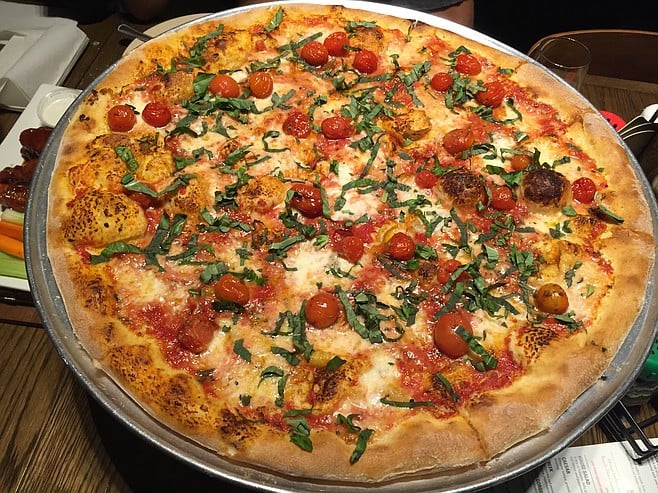
A specialty pizzeria can focus on providing the deep-dish pizza found in Chicago, the thin-crusted slices found in New York, or even the charred Neapolitan “apizza” common to New Haven. While these are viable options that will attract a loyal base of customers, Hirsch recommends a different approach by instead creating a restaurant that treats pizza with a greater deal of reverence. Using fresh, unique ingredients while taking a more gastronomic approach, gourmet pizzerias are able to attract a wide range of customers who are looking for a new way to enjoy something incredibly familiar.

Sunday, September 27, 2015

On the Joys of Making Pizza at Home

As a frequent traveler, I come across many people who believe the pizza originating from their hometown is always best. This goes for some of the more obvious destinations, such as New York, Chicago and Naples, but I have also encountered plenty of others who are willing to vehemently argue the fact that Portland or New Haven or some other surprising location has the best pizza.

Whenever the topic of “Best Pizza Anywhere” comes up, it is almost a certainty that the speaker will eventually mention how difficult it is to find good pizza outside of their home, with some going as far as to bring a box of pizza as their carry-on luggage for their returning flight. For transplants to other cities, this can result in a bit of a melancholic feeling with regard to local pizza, but David R. Gray Jr. believes he has a simple solution.

According to Gray -- and despite the protestations of New Yorkers everywhere -- the quality of the pizza has nothing to do with the local water supply or the specific weather conditions of a particular region. Instead, it has everything to do with style, and any style of pizza can be easily replicated in the home. Gray says the process may be a bit more complicated if the dough is made from scratch, but it is worth learning to really create a regionally accurate pizza.

I believe it is always best to control every aspect of the process, and that includes making the dough. If the dough is bought at a supermarket or a pizzeria, you have no say over whether the baker should use olive oil or sugar in the dough to add flavor, nor will you be able to control the consistency of the crust, since the amount of yeast added at the time of mixing has an influence on how the pizza will bake in the oven.

As for creating the actual pizza, pounding the dough is often where people encounter the greatest difficulty. Gray suggests that first-time pizza makers invest in several pounds of dough (one pound typically makes a single large pizza) on which to practice. After adding enough flour to cover the dough ball, most pizza makers work from the edge of the ball to the center. Once the dough has been pounded out and stretched, adding the sauce, cheese and toppings is all that remains.

By making pizza at home, transplanted New Yorkers will be able to make a traditional thin-crusted pie that is perfect for folding, and Chicagoans can make a deep-dish pie that tastes every bit as good as the pizza they would find at home.

Friday, September 25, 2015

Straddling the Line In the Pizza Debate Between Chicago and New York

In the long-running debate between New York and Chicago, no clear winner has been identified as the owner of the best pizza in the United States. Obviously, Chicagoans favor the thick, deep-dish pizza that comes with tomato sauce atop the cheese, and New Yorkers ridicule anyone who thinks that a pizza that can’t be properly folded is better than the thin-crusted slice that can be found on just about any city street corner.

Outside of New York and Chicago, the debate tends to be a bit more civil since the emotions that typically arise when defending one’s home do not often play a role in a discussion held elsewhere. Whatever side someone falls on is generally accepted as a matter of personal preference rather than geographic allegiance, but pizza lovers nationwide tend to be quite surprised when someone not only has no opinion on which is better, but claims to enjoy both equally.

In the experience of David Kravitz, this is the position that most frequently leads to arguments outside of Chicago and New York, though not necessarily in an unpleasant kind of way. Instead, there is frequently a demand for the uncommitted party to decide one way or another, as if it is unfair to all of those who have staked a position alongside the residents of a city they may have never even visited. For some reason, the idea that a person could happily enjoy both kinds of pizza and have no preference is, at best, difficult to understand, and, at worst, completely unacceptable.

After learning this, I wondered why this was the case and set out to uncover the reason. As a former resident of Chicago, I had always sided with notion that the deep-dish pizza with the flaky crust is best. In order to fully understand the other side of the argument, I avoided Chicago-style pizza for a full year and instead opted for a New York-style thin crust each time I had a craving for pizza. This was difficult, but given the importance of the subject, I was willing to struggle.

At first, I had no problem in continuing to claim Chicago as best, but over time I began to develop an affinity for the folded slice with the thin crust that seemed so increasingly perfect. Eventually I realized that both styles were appealing in wildly different ways, and the only reason anyone has a preference is simple familiarity. Now, I count myself among the rare few that believe both are equally delightful.

Wednesday, May 6, 2015

Tim DeCapua What Is The Evolution Of Gaming?

Video games have really come a long way in every aspect. While older video games remain as classics to the older crowd, they are deemed as lame and insignificant to the younger audiences. I remember the first game I ever played in 1994. Castle Wolfenstein 3D. This was the very start of 3-D digital art.

How have games changed since the early developments?

In those days, a game was pretty straight forward with a single objective: Kill everything and get to the end alive. Today, there are many things you must do to the point some games are more stressful than enjoyable. You may have to follow a guy without being seen. Get to the communications station and broadcast a message, but oh no! You discover you need a part for the radio to work and you find yourself running around the map trying to complete your secondary objective in order to complete the primary objective and let's not forget that you can't set off alarms in the process of completing the mission.

You don't have to be a rocket scientist to see the graphics have evolved over the years becoming more and more realistic to the world that is familiar to us. As if the game itself wasn't expensive enough, now you need to invest a few hundred dollars into your PC to upgrade it and make the new releases enjoyable. *Cough cough* Assassin's Creed Unity *cough*. 


What is the future of gaming?

We are already seeing gaming being transformed with Microsoft's new HoloLense technology. Basically, every anticipation you've had for virtural realtity is getting closer and closer to being in the palm of your hands very soon. This technology will do more than just let the user enjoy a game, of course, and it could change the way prototypes are built, business is conducted and so much more. 

Monday, May 4, 2015

What is the Tim DeCapua Future Of Cell Phones?

It's no surprise that the inspiration of cell phones first came from Star Trek. It was an ingenious idea that was original and fresh.


Where did the idea for cell phones come from?

The idea for cell phones first came about roughly 40 years ago in 1973.


What will cellphones be like in the future?

Today, our cell phones are the size of our hands. They fit perfectly into our palm and  are apart of our lives in every way, every day. The future of this technology is rumored to have cell phones be part of not just our lives, but also our bodies. We are already seeing this slowly take effect with the release of the new Apple Watch. The watch will allow normal phone calls as well as FaceTime calls, enabling you to see the other person on your wrist.

Tuesday, November 11, 2014

Saleh Stevens Air Circulation Considerations


Air circulation is absolutely vital in an effort to keep cool during the summer. Something that is often overlooked is the need to air movement over your skin. When you skin has air moving across it, your skin feels noticeably cooler. This principal is what a "swamp cooler" uses to keep your home feeling cooler.

What is a swamp cooler?

A swamp cooler is nothing more than humid air being forced into your home. There is no actual "cooling" happening, just the feeling that water does to your skin. Without the water a swamp cooler would still feel cool, but the moist air is what makes the biggest difference.

What about a fan?

Fans are great ways to move the air around your home and keep you cool in the process! Whether you have a ceiling fan, a box fan, or a fan that rotates, the principal of circulation still works the same.

If you're looking to stay cool in the summer while keeping your electricity bill down, try turning up the A/C and turning on a fan!